Two Years In: Understanding ULA’s Early Impact & What We’re Learning Together
Los Angeles is in the midst of one of the most complex housing challenges of our time. As rents rise, wages stagnate, and more Angelenos struggle to stay housed, the need for coordinated, long-term solutions has never been more urgent.
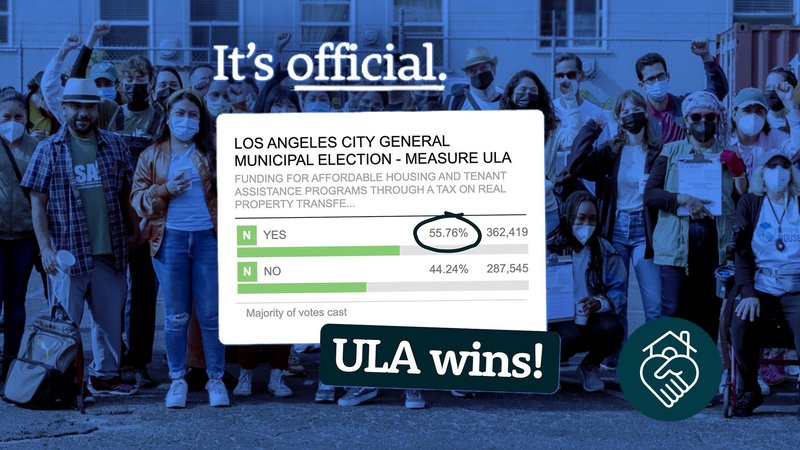
Two years ago, voters approved Measure ULA — a local real estate transfer tax on properties over $5.3 million — with the goal of creating stable, dedicated funding to help prevent homelessness, protect tenants, and build more affordable housing. At Liberty Hill, we supported ULA because the measure aligned with what our community partners — those working every day in neighborhoods hardest hit by displacement and housing insecurity — have long told us is needed: consistent, flexible, locally controlled resources that meet people where they are.
Today, with two years of implementation behind us, we’re learning a great deal about ULA’s early impact. We’re also engaging thoughtfully with emerging studies and commentary, some of which raise questions about the measure’s long-term effects on development. As with any major public policy, especially one designed to shift long-standing market dynamics, it’s important to evaluate early data with both rigor and care.
This post shares what we know, what we’re watching, and why Liberty Hill remains committed to transparent, community-informed analysis.
ULA’s Early Indicators: Signs of Real Impact
Although ULA is still in its initial years of implementation — and many of its large-scale housing developments are still moving through multi-year pipelines — the early indicators show meaningful results:
- 11,000 Angelenos kept housed through rental assistance
- 795 affordable homes supported in the development pipeline
- 10,000 union jobs accelerated, strengthening the local workforce
- 140,000 tenants educated on their rights
- Full funding for enforcement of the Tenant Anti-Harassment Ordinance
- Support for implementing Right to Counsel, ensuring more Angelenos have access to legal protections
ULA has already generated more than $944 million in new, locally controlled revenue, with steady growth over time.
For families facing eviction, for tenants navigating harassment, for seniors on fixed incomes — these outcomes matter. They represent stability, safety, and the ability to stay rooted in community.
Why Some Recent Reports May Tell an Incomplete Story
In recent months, several studies have circulated that question ULA’s long-term impact on development. Engaging with new research is healthy — but interpreting early data in the midst of significant economic volatility requires caution.
A group of independent academics recently reviewed one of the most widely cited studies and found several issues that limit the ability to draw reliable conclusions at this stage, including:
- Very short observation windows during a period marked by unusual post-pandemic market conditions
- Small sample sizes
- Use of proxies that don’t directly measure building activity
- Exclusion of major Executive Directive 1 (ED1) housing projects that significantly expanded the development pipeline
- Methodological assumptions that don’t fully reflect the complexity of LA’s real estate economy
These findings don’t dismiss the questions being raised — they highlight the need for more complete datasets and the benefit of monitoring long-term indicators before making definitive judgments.
Public policy outcomes rarely unfold neatly or immediately. Evaluating ULA’s full impact will require time, continued research, and a holistic look at LA’s evolving housing landscape.
Context Matters: Understanding the Broader Housing Ecosystem
ULA operates within a larger set of factors influencing housing production, including:
- interest rates
- construction and insurance costs
- labor availability
- zoning reforms such as the new Citywide Housing Incentive Program (CHIP)
- entitlement and permitting trends
- post-pandemic real estate normalization
These variables significantly shape development decisions. Importantly, in 2025 alone, developers filed more than 17,000 new housing unit proposals following the adoption of CHIP — a reminder that land use changes, market cycles, and financing conditions all play major roles independent of ULA.
Why Liberty Hill Continues to Support Community-Led Housing Solutions
For nearly 50 years, Liberty Hill has partnered with community-based coalitions working directly in areas most affected by housing instability. Through grantmaking, capacity building, and civic engagement strategies, our grantees:
- help tenants avoid unlawful evictions
- provide outreach and education
- support seniors and low-income families navigating complex housing systems
- advocate for policies that stabilize neighborhoods
- ensure that those most impacted have a real voice in decision-making
ULA directly strengthens many of these same goals.
It also includes strong civilian oversight, transparency requirements, and public reporting — components that align with Liberty Hill’s values around accountability and good governance.
Because of our close partnership with organizations working on the front lines of LA’s housing crisis, we have a unique vantage point. We see both the immediate impact of ULA-funded services and the broader systems shifts required to build a more stable and equitable future for all Angelenos.
Looking Ahead: What We’re Watching and Sharing
As we continue to monitor ULA’s progress, Liberty Hill remains committed to:
- engaging thoughtfully with emerging research
- uplifting data that helps donors and community members make informed decisions
- sharing transparent updates as outcomes evolve
- working alongside partners to strengthen systems that prevent displacement and expand access to affordable housing
There is still much to learn, and we approach this work with humility, curiosity, and a deep commitment to the communities we serve.
A Shared Path Forward
No single policy can address Los Angeles’s housing crisis alone. But early evidence shows that ULA is making a meaningful difference in the lives of thousands of residents, while laying the groundwork for long-term, systemic solutions.
As more information becomes available, Liberty Hill will continue to assess outcomes carefully and communicate openly with our supporters and partners. Together, we can build a Los Angeles where stability, dignity, and housing are realities for everyone.