
Resistance in Action
This past year, amid political upheaval and tightening threats to civil rights, Liberty Hill’s grantee partners showed what democracy looks like in practice: communities organizing together, demanding to be heard, and reshaping systems that were never designed for them. Across Los Angeles, movement leaders turned adversity into agency— proving that resistance is not reactionary; it’s visionary.
Youth & Transformative Justice: From Punishment to Possibility
Over the past year, young people and families organized to end youth incarceration—and Los Angeles County listened. Years of grassroots pressure by Liberty Hill partners such as Youth Justice Coalition, Arts for Healing and Justice Network, Students Deserve, and the Reimagine LA Coalition culminated in a historic shift from punishment to prevention. That transformation deepened last year. The Ready to Rise initiative — a policy implementation win shaped by community organizations and emerging from the California Funders for Boys and Men of Color Southern California initiative— co-managed by Liberty Hill and the California Community Foundation, expanded to reach more than 100 organizations and 25,000 youth, with $50 million in sustained annual funding for community-based programs. Meanwhile, the Youth Development Incubation Academy—a Liberty Hill collaboration—equipped smaller, BIPOC-led groups to navigate government contracting and deliver transformative care. At the same time, the Liberation Fund mobilized partners like the Young Women’s Freedom Center, A New Way of Life, and Sister Warriors Freedom Coalition to confront the criminalization of girls and gender-expansive youth. Together they secured releases from detention, exposed abuse inside facilities, and advanced a healing-centered model for public safety. This is democracy in its purest form—power shifting from institutions to people. Through organizing and collective vision, community groups ensured that those most harmed by the system now shape the solutions that replace it.
Housing Justice: Keeping People in Place
As corporate landlords and speculative developers sought to roll back renter protections, Liberty Hill’s housing partners fought to keep Angelenos in their homes—and won critical ground.
The Stay Housed LA and United to House LA coalitions helped thousands of renters access legal defense, education, and emergency relief. Organizations like Strategic Actions for a Just Economy (SAJE) and LA Voice framed tenant protections as democracy in action: the right to stability, participation, and dignity.
By linking faith-based organizing and civic education, these coalitions reversed decades of policy that treated renters as consumers instead of citizens. Their work turned city-council hearings, community meetings, and legal clinics into classrooms for democracy.
Environmental Justice: Power Against Pollution
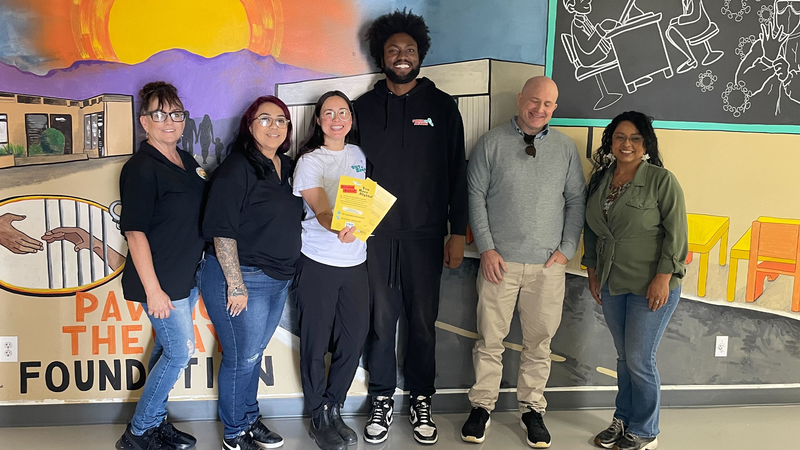
In Los Angeles’ frontline neighborhoods—from Wilmington to the San Gabriel Valley—residents continued to confront decades of environmental racism and disinvestment head-on. This past year brought major breakthroughs through EJ Ready, Liberty Hill’s collaboration with Resources Legacy Fund that equips grassroots organizations to access and implement public climate funding.
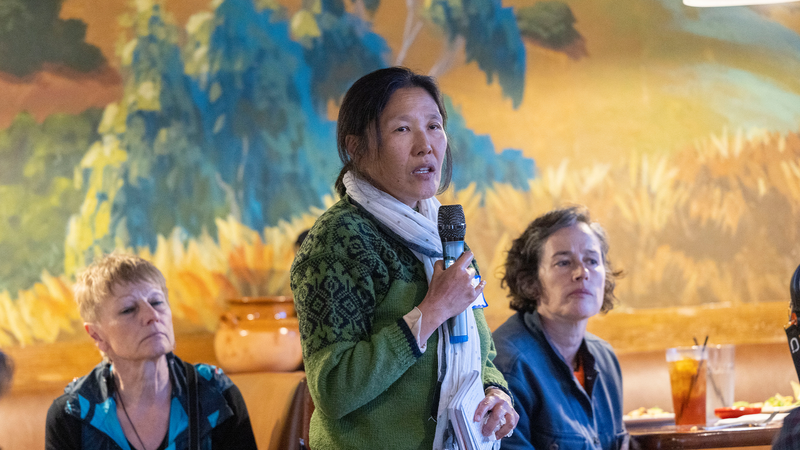
Community-based groups like Active SGV, TRUST South LA, and Pacoima Beautiful leveraged over $20 million in new federal and state funding for clean-energy retrofits, e-bike libraries, and air-quality monitoring systems designed by residents themselves.
By training community organizers to navigate complex government grants, Liberty Hill and its partners democratized access to climate investments—ensuring that those who have borne the brunt of pollution can lead the clean energy transition and shape a more resilient Los Angeles.
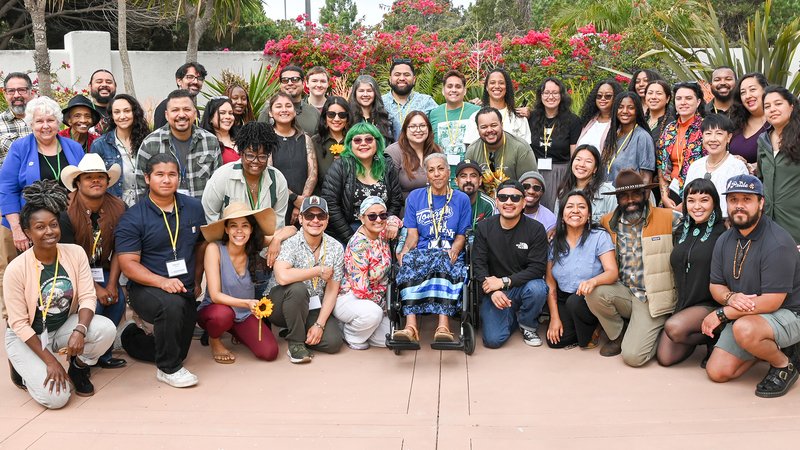
We’re showing what it looks like when communities define the solutions to environmental injustice
Organizing & Movement Infrastructure: Power That Lasts
Across all these fronts—youth, housing, and environment—the through line this past year underscored the critical importance of organizing: people learning, acting, and deciding together. That’s also the heartbeat of immigrant- and worker-rights partners like CHIRLA, KIWA, and LAANE, who reminded Los Angeles that democracy depends on the right to organize without fear.
In June, CHIRLA faced a direct attack when federal officials accused the organization of “bankrolling civil unrest.” Instead of retreating, they doubled down on their mission. “People deserve this, and so we’re going to fight alongside them for what they’re demanding,” said Areli Hernandez of CHIRLA. “We’re fighting alongside people, not speaking for them. They’re part of this struggle.”
“When we go to Washington, D.C., the members go,” Hernandez added. “They tell their stories: ‘This is what’s happening in my community. This is why you need to pass this bill.’ That’s what a membership organization is—the community connected to the halls of power.”
That ethos—accountability to community rather than compliance with power—runs through Liberty Hill’s broader ecosystem. From KIWA’s cross-racial worker organizing in Koreatown to LAANE’s campaigns for fair labor and climate jobs, these organizations model participatory democracy every day.
In Hernandez’s words, the attacks on CHIRLA “are attacks on civil society itself… because we organize people, and we organize people well.” By standing with these partners, Liberty Hill underscored a simple truth: philanthropy’s role isn’t to manage change from afar, but to resource the people making it.
Related Page
The Common Thread: Resistance as Renewal
What unites these stories is not only defiance—it’s construction. Each campaign built infrastructure that will outlast any one grant cycle or election: legal-aid networks, youth-serving systems, and leadership pipelines that move people from protest to policy.
As movements grow stronger, so does democracy itself. This past year proved that when communities organize across race, geography, and issue, resistance becomes a creative act—one that builds belonging, redistributes power, and reclaims public space for the common good.
Resistance isn’t the opposite of democracy—it’s how democracy survives. Liberty Hill’s partners showed that fighting for housing, healing, and human rights is not separate from civic participation—it is civic participation.
Together, they’re proving that democracy in action begins where people organize for dignity, and ends only when justice is shared by all.