
The Power of Proximity: Two Lessons from One Day in Los Angeles
On May 29, one group of donors, funders, and community partners sat inside a Los Angeles County youth prison listening to incarcerated young people describe the support they wish they had received before entering the youth justice system.
Across Los Angeles, another group stood overlooking the Inglewood Oil Field, imagining how land long defined by extraction could be transformed into a community asset.
At first glance, these experiences had little in common.
In reality, they revealed the same lesson: meaningful change begins when people move closer to the communities most affected by injustice—and to the leaders building a different future.
Understanding the Systems We Inherit
These gatherings did not happen by accident. They reflected years of relationship-building across sectors that do not often share space. On May 29, donors sat alongside organizers. Public officials listened alongside community leaders. Foundation executives and donor activists learned directly from people most affected by the policies they help fund and shape.
Creating those connections is not ancillary to systems change. It is one of the ways systems change happens.
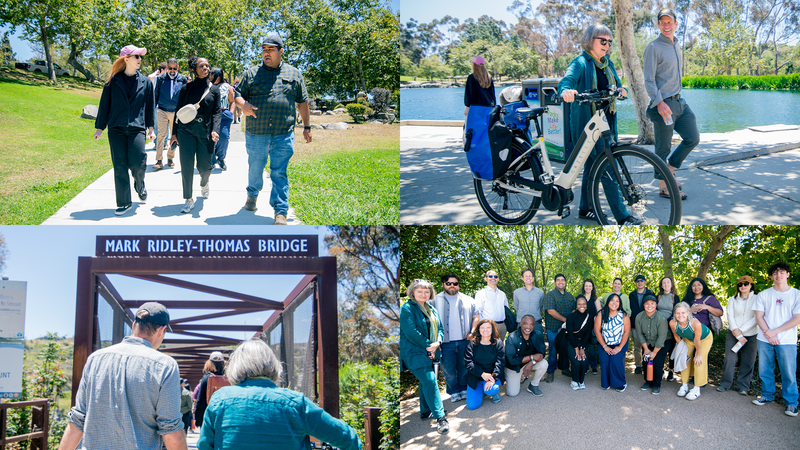
The Youth Justice Bus Tour, hosted by Liberty Hill Foundation, Smart Justice California, and the Anti-Recidivism Coalition, brought together donors, elected officials, foundation leaders, advocates, researchers, and community partners for a day of learning and reflection. Participants came to Barry J. Nidorf Juvenile Hall to sit in small groups and engage in thoughtful dialogue with directly impacted youth, not only to hear about their experiences but also to share their own.
What emerged from those conversations was not a simple narrative about individual choices or personal responsibility. Instead, young people spoke about growing up amid instability, poverty, violence, and a lack of consistent support systems. They reflected on the programs, mentors, and opportunities they wished had been available before they entered the justice system. They spoke about their dreams and aspirations for themselves and their futures.
They also shared what they needed while still inside: more consistent programming, reliable access to basic necessities, and the emotional challenge of imagining life beyond incarceration while knowing they could not yet return home.
Across town, environmental justice leaders and funders were engaged in a parallel conversation about another system with deep roots in Los Angeles: urban oil extraction.
For decades, communities surrounding the Inglewood Oil Field have lived with the health, environmental, and economic consequences of extraction. Organizers described years of advocacy, coalition-building, and policy work that helped secure local ordinances to phase out oil drilling and create opportunities for community-led land stewardship and redevelopment.
While the issues were different, both conversations centered on a similar question: What happens when systems designed without communities at the center are allowed to shape lives and neighborhoods for generations?
Featured Video
Building the Good
At Liberty Hill, we often talk about the importance of not only challenging systems that cause harm, but also building the alternatives that make a more just future possible.
That spirit was evident throughout both experiences.
What connected both experiences was not simply a critique of broken systems.
It was the presence of people building alternatives.
In youth justice, community organizations are creating pathways to build one of the nation's largest youth development systems—investing in healing, mentorship, education, employment, and belonging to help young people thrive without incarceration. Participants heard how years of advocacy, political courage, and sustained investment have contributed to significant declines in youth incarceration and youth crime across Los Angeles County. The conversation was not simply about reducing incarceration. It was about recognizing that we already have many of the tools necessary to help young people thrive before they ever encounter the justice system.
In environmental justice, residents and organizers are advancing a vision for land stewardship, environmental health, and community ownership that moves beyond extraction. Communities are asking what comes next: How can land be reclaimed for public benefit? How can local residents help shape future development? What would it look like for communities that have borne the burden of pollution to also share in the benefits of reinvestment?
In both cases, communities are doing more than resisting harm. They are designing the future.
They are investing in the future before it fully exists—planting the seeds of safer communities, healthier neighborhoods, and greater opportunity for the next generation.
They are building the good.
The Role of Philanthropy—and the Role of Liberty Hill
The lessons from May 29 extend beyond youth justice and environmental justice.
They point to a broader truth about social change: transformation happens when philanthropy moves closer to the work, closer to communities, and closer to the people most impacted by injustice.
Philanthropy is most effective when it does more than fund programs. It can help connect people, align resources, strengthen movements, and create the conditions for long-term systems change.
When donors and funders move closer to communities, they gain a deeper understanding of both the challenges and the solutions. They see not only what is broken, but what is already working and ready to grow.
At Liberty Hill, we believe systems change requires strong relationships across sectors. Our role is to help connect community leaders, organizers, public agencies, donors, funders, and residents around a shared vision for a more just Los Angeles.
We do this because transformation rarely happens in isolation. It happens when people with different forms of power—including community power, political power, narrative power, and philanthropic resources—come together in service of a common goal.
Every day across Los Angeles, community leaders are advancing solutions that make neighborhoods healthier, safer, and more equitable. The question is not whether those solutions exist.
The question is whether all of us—donors, funders, public officials, and residents—are willing to invest in helping them grow over the next 50 years.